Saturday, June 14, 2014


Tuesday, June 10, 2014
The Cheng Map of China
In 2008, an old map was rediscovered in the Bodleian Library of Oxford University, after more than 350 years of neglect. It is now known as The Selden Map of China, named after its donor John Selden (1584-1654). The map appeared to have been made in ca 1624. After extensive restoration, it is now on display and also available on line, see:
http://seldenmap.bodleian.ox.ac.uk/map
Tonio Andrade has proposed in his book, "Lost Colony: the Untold Story of China's First Great Victory over the West" (2011 Princeton Univ Press), that the map might have been created by the Cheng Family, perhaps under the supervision of 鄭芝龍Cheng Zi-long (p 23). If true, then Selden's Map is actually the Cheng Map of China, 鄭芝龍航海圖.
Of particular interest are the markers denoting Taiwan which appears as two islands on the map. The one in the north 北港 might be the seaport of the same name in modern-day Yun-lin; although it could also be an ancient now disused name of Taiwan. In the south, 加里林 appeared to be the now 佳里 in Tainan. There are also several small islands off the north shore. They were probably Keelung or the 宮古群島. To the west of Taiwan was of course Hokkien with the major cities clearly marked out. 泉州 was the home base of the Cheng Clan.

Tomothy Brook in his "Mr. Selden's Map of China" (Bloomsbury Press, 2013) has suggested that the map "could have had impact on European cartographers" but didn't, for "by the time the map is on display in Oxford, it was too late to make any difference". How true.
Oddly, as far as the relationship between 鄭芝龍 and his mentor 李旦, Brook quoting from Andrade, as one of an unconfirmed homosexual nature. Much like the putative rape of Koxinga's mother Lady Weng, insinuating someone has been sexually violated is a traditional Chinese insult, a way of tarnishing his or her reputation. The official Qing history is fairly dubious in its claims when it comes to the Cheng Clan; unfortunately, the lies are still being perpetuated by students of this part of the history.
http://seldenmap.bodleian.ox.ac.uk/map
Tonio Andrade has proposed in his book, "Lost Colony: the Untold Story of China's First Great Victory over the West" (2011 Princeton Univ Press), that the map might have been created by the Cheng Family, perhaps under the supervision of 鄭芝龍Cheng Zi-long (p 23). If true, then Selden's Map is actually the Cheng Map of China, 鄭芝龍航海圖.
Of particular interest are the markers denoting Taiwan which appears as two islands on the map. The one in the north 北港 might be the seaport of the same name in modern-day Yun-lin; although it could also be an ancient now disused name of Taiwan. In the south, 加里林 appeared to be the now 佳里 in Tainan. There are also several small islands off the north shore. They were probably Keelung or the 宮古群島. To the west of Taiwan was of course Hokkien with the major cities clearly marked out. 泉州 was the home base of the Cheng Clan.
Tomothy Brook in his "Mr. Selden's Map of China" (Bloomsbury Press, 2013) has suggested that the map "could have had impact on European cartographers" but didn't, for "by the time the map is on display in Oxford, it was too late to make any difference". How true.
Oddly, as far as the relationship between 鄭芝龍 and his mentor 李旦, Brook quoting from Andrade, as one of an unconfirmed homosexual nature. Much like the putative rape of Koxinga's mother Lady Weng, insinuating someone has been sexually violated is a traditional Chinese insult, a way of tarnishing his or her reputation. The official Qing history is fairly dubious in its claims when it comes to the Cheng Clan; unfortunately, the lies are still being perpetuated by students of this part of the history.
Re-posted from http://danshuihistory.blogspot.com
Friday, May 2, 2014
Penang delegation joins celebration in Tainan
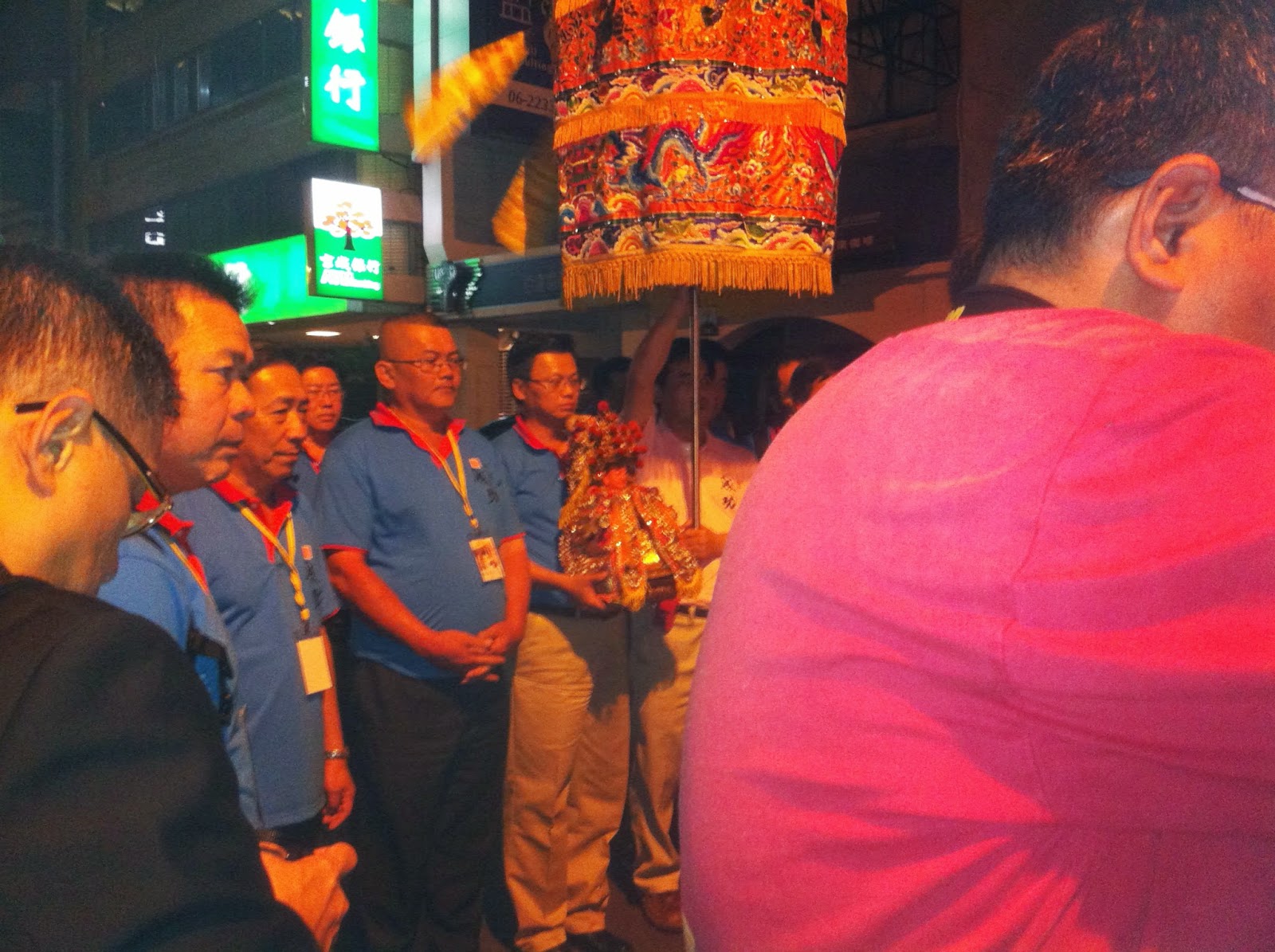 |
| Procession down 忠義路 to Cheng Family Temple (4/27/2014) |
 |
| Cheng Family Temple |
 | ||
| Looking directly at the statue of Koxinga |
 |
| Banquet accompanied by traditional music |
 |
| Delegates from Penang at 延平郡王祠 (4/29/2014) |
Saturday, March 29, 2014
Cheng Clan visiting Koxinga Temple in Penang


Source: 世界鄭氏宗親總會
(The World Cheng's Clansmen General Association)
Friday, January 3, 2014
Chilling Royal Qing Records
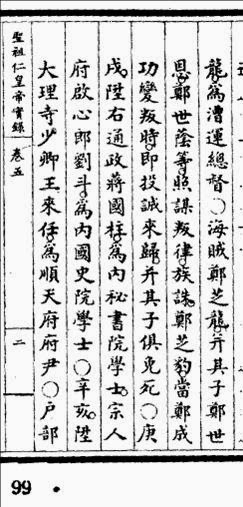
This Nov 24, 1661, Qing royal order of Emperor 康熙 (1654-1722, reigned 1661/2 - 1722) recorded the death sentence of 鄭芝龍, his two sons 鄭世恩 and 鄭世蔭, and family. At the same time, 鄭芝豹 (鄭芝龍's brother) and his sons, who had surrendered to the Qing before the Koxinga revolt, were spared.
Earlier on May 17, 1657, Emperor 順治 (1638-1661, reigned 1644-1661) decreed that, instead of an immediate execution, 鄭芝龍 and family members be banished to and imprisoned in 寧古塔 (near present-day 黑龍江省牡丹江市). In addition, all family properties and holdings were to be confiscated. They were forced to travel on foot in yokes and chains all the way from Beijing to the destination (a distance of ca 1,440 km). Accompanying him in the prison was also a Franciscan priest originally from Macau where 鄭芝龍 was baptized.
For more, see here.
Saturday, December 28, 2013
Cheng Family in Tamsui

The biographies of EyeDoc's granduncle (鄭木筆, a physician who gained fame for curing a stomach ailment of the defender of Tamsui, General 孫開華, immediately after the Sino-French war) and second uncle (鄭嘉昌, principal of Wen-hua and Tamsui elementary schools) appear on pp 306 and 304 in Vol 3, respectively.
Members of EyeDoc's paternal grandmother side of family, 忠寮李家, are mentioned in quite a number of places, and the most recent entry, engineer turned Tamsui landscape artist 李永沱. Most important is the record of arrival in Tamsui, from 福建同安, of the first 李 generation in 1751.
An old group photo, class of 1937/8 of 淡水女子公學校Tamsui Girls Elementary School from this blog [here] is quoted on p 300 in Vol 2.
The Cheng family of Tamsui, belonging to 蓮宅鄭 [The House of Lotus], was originally from 泉州南安石井 later re-settled in 同安. This branch descends from one of the survivors of the 1661 Qing Imperial edict of 誅三族, which was to execute not only 鄭芝龍 [鄭成功Koxinga's father, who had surrendered, after ignoring Koxinga's plea for him not to, to the Qing in 1646], but also three generations of the Cheng Clan including 鄭芝龍's parents, brothers and sons and their wives. Only his principal wife Lady 顏Yan and a brother 鄭芝豹 were spared. His grandchildren, fortunately, were left untouched.
 |
| Cheng Family record listing 鄭芝龍's sons, daughters-in-law, and grandsons; 鄭成功 is identified by his given names, 森 and 大木. |
In the 1930s, 鄭木筆, better known in Tamsui as 木筆先Master Vo-Bi, had returned to 泉州 to pay respects to Cheng ancestors whose grave sites could only be located by landmarks because of previous destruction of the tombs by the Qing - a way of punishing Koxinga, in addition to killing his father and brothers, for his refusal to yield.
After the fall of Tung-Ning Kingdom東寧王朝 in 1683, Koxinga's direct descendants were held hostage in Beijing, pressed into military service, forbidden to return to their hometown in 泉州 where all their properties were already confiscated. Other surviving branches of the Cheng Clan continued on in Hokkien; some, as noted above, had moved to Tamsui, now into the 8th generation since the arrival.
Friday, December 20, 2013

Subscribe to:
Posts (Atom)